Tigers are a real hot topic for the BBC Natural History Unit, especially with the current success of 'Lost Land of the Tiger' a BBC expedition that discovered a lost population living in the remote Bhutan Mountains (Earth News). Having tracked Tigers myself to film (Poo, Pee & Pugmarks) I know just how difficult it is to catch even a glimpse of this fascinating feline! But here is an exclusive insight into the BBC's perspective on the thrill and frustration of filming tigers in the wild. From BBC Wildlife Finder.
- Paul
http://www.bbc.co.uk/nature/species/tiger#p00b6wzf
Showing posts with label BBC. Show all posts
Showing posts with label BBC. Show all posts


6.8.09
David Attenborough: Bristol and Wildlife TV - more than an accident of History.

From: Made in the UK online essays at the BBC
www.bbc.co.uk/madeintheuk
www.bbc.co.uk/madeintheuk
(Image from Aerial online)
THE NATURAL history unit in Bristol is a rare constant in an evolving broadcast world. Whereas other specialist centres of excellence have come and gone, the NHU has always been there, or so it seems. What happy combination of circumstances and talents made Bristol the ideal habitat for the unit, enabling it to grow into the most enduringly successful out-of- London production department in the history of the BBC?
You might argue that there has always been a strong interest in natural history in the West Country, and a long tradition there of self-educated, amateur naturalists. But the truth is that the NHU would not exist in Bristol, had it not been for the enthusiasm and passion of one man, and his belief in the public service ideals of the BBC. Desmond Hawkins was not himself a trained naturalist, nor a West Countryman. He moved as a radio producer to the BBC in Bristol after WW2 and started natural history production in Bristol with radio programmes such as The Naturalist and Birds In Britain, long before the arrival of television in the area. As a boy, I listened to those programmes, and I dare say my own passion was stoked by them.
 Desmond Hawkins interviewing Sir Peter Scott
(Image from WildFilmHistory)
Global reputation In 1952 I began my career with the BBC in London, at the tv talks department in Alexandra Palace. I worked on anything from political broadcasts to archaeological quizzes. But before long I launched Zoo Quest, a series which took me all over the world and helped to determine the future course of my life. Meanwhile, in Bristol, Desmond Hawkins had decided that as soon as it was physically possible to make television programmes in the West Country, his team of natural history specialists would show these upstarts in London how it was really done. Hardly was Zoo Quest on the air in 1954 than Desmond had decided to launch his own series Look, with Peter Scott, whose bird sanctuary at Slimbridge was only 20 miles away. The fact that there was still no actual tv studio in the city, or for that matter any transmitter or tv sets in the region, did not deter him. He brought in an outside broadcast unit, ran cables and cameras into the large radio studio and piped the programme by landline up to London. So natural history tv programmes were being made in Bristol even before anyone in the region could watch them. Enthusiasm is infectious, and Desmond gathered about him a core of people whose passion for natural history equalled his own, so that by 1957 it was officially recognised as a production specialism in Bristol, and he set up the NHU proper there.
When I became controller of BBC Two in 1965, I naturally wanted to indulge my own passion for natural history. When BBC launched colour tv in Britain, I could think of no subject better suited to showing off the new technology. I commissioned from the NHU The World About Us, initially a series of 26x50 minute programmes that turned into a long-running strand, and helped to establish a global reputation for the unit. Bristol also produced Life, a magazine programme that covered natural history news stories. Productions like these, building on the foundation of its existing BBC One output, secured the future of the unit and bound natural history production ever more closely with its Bristol roots.

David Attenborough outside a cave entrance during filming of Life on Earth
(Image from WildFilmHistory)
At BBC Two, I also launched a style of documentary which would now be described as the ‘landmark’ series, taking a big subject and devoting 13 onehour programmes to it. The first of these was Kenneth Clark’s Civilisation, followed by Jacob Bronowski’s The Ascent of Man. An obvious contender for the same treatment had to be the history of all life on earth, but that was a subject I hankered after tackling myself. As soon as I resigned from my management job, I suggested the idea to one of the most experienced producers at the NHU, Chris Parsons, who would later himself head the unit. This was without doubt at the time the most ambitious series to be produced in Bristol. We started work on it in the mid-1970s, and the ground-breaking Life on Earth was transmitted in 1979 to huge audiences, selling around the globe so that eventually it was estimated that 500m people watched it. There is a great deal of trial and error in producing natural history programmes, and the people who make them have built up extraordinary levels of knowledge and expertise. Waiting patiently week after week in freezing temperatures for a snow leopard to creep across a mountainside, or understanding precisely when and how to film the annual hatch of turtles on a starlit beach, requires special skills. So too does the post- production of natural history series, and once a commissioning momentum was established, over the years the NHU in Bristol attracted many satellite businesses and freelancers. The city has accumulated a unique set of trades and talents.
Cultural identity At the same time the cultural life of Bristol has benefited from the existence of the NHU. The world’s first wildlife film festival, Wildscreen, was held in the city, attracting visitors from all over the world. The University of Bristol would probably tell you that its zoology department gains greatly from the fact that the best natural history television unit in the world is within walking distance, and a close and symbiotic relationship has sprung up between the two. Producers and academics drink in the same pubs and exchange ideas, and many a promising young graduate has found employment at BBC Bristol. It may have been historical accident that the NHU was founded in Bristol, rather than London, but instinct tells me that when Desmond Hawkins produced the first natural history radio programmes there in 1946, he already saw far further than the wildlife that was on his West Country doorstep. Natural history programme making has become as much a part of Bristol’s cultural identity as seafaring or the wine trade. The skills it takes to make such programmes are now woven into the fabric of the city, and long may it remain so.
Read David Attenborough’s full article and the other Made in the UK online essays at the BBC
28.7.09
BBC Natural History Archive launched
Following the recent launches of Earth News and Out of the Wild the BBC Natural History Unit have just launch the archive clip section of 'Earth'. This provides unprecedented access to the BBC's natural history assets combines with 3rd party data, to create media-rich pages about species, behaviour and habitat and forms the foundation of the new Nature offering on bbc.co.uk.
There aren't yet any 'homepages' to aid navigation, but if you fancy a browse here are some entry level pages to showcase the different areas of interest:


Still to come on the archive section are radio programmes, plants, season, timelapse and other special capture pages and lots more behaviour..
There aren't yet any 'homepages' to aid navigation, but if you fancy a browse here are some entry level pages to showcase the different areas of interest:


Still to come on the archive section are radio programmes, plants, season, timelapse and other special capture pages and lots more behaviour..
6.7.09
Andrew Jackson appointed as new Head of the BBC Natural History Unit
 Andrew Jackson has today been appointed as the new Head of the BBC Natural History Unit.
 Currently Managing Director of the independent production company Tigress, Andrew will replace Neil Nightingale, who is standing down after six years in the role to return to programme making.
Jana Bennett, Director, BBC Vision, says: "I am delighted that Andrew is joining the BBC in this important role leading the Natural History Unit, the centre of the best natural history film-making in the world.
"Andrew's own track record demonstrates his enthusiasm and dedication to programmes about the natural world.
"I am confident that Andrew will support the NHU in delivering ever more ambitious projects which deepen our appreciation of natural history and amaze us with the beauty of the world about us."
Andrew will report to Tom Archer, Controller, Factual Production.
Tom Archer says: "I am delighted that Andrew is joining the BBC leading the Natural History Unit. Andrew is a hugely experienced and talented programme maker.
"He is taking over at an exciting time for the department with a number of important projects forthcoming, including Life and Frozen Planet, and I believe he is ideally suited to take the NHU forward to new successes."
Andrew Jackson says: "I'm delighted and hugely honoured to be taking on this prestigious role.
"It has been an incredibly tough decision to leave a company that I've helped build over the last 17 years but opportunities like this come along so rarely.
"It's a huge, exciting job and I'm really looking forward to getting started."
During Andrew's time at Tigress, the company built a worldwide reputation for making outstanding science, wildlife and adventure programmes.
He joined the company 17 years ago to produce and direct the ITV and PBS specials In The Wild, working with, among others, Julia Roberts, Goldie Hawn and Bob Hoskins.
He has been directly involved in producing or directing more than 100 hours of TV and has overseen many more in his role as MD.
He began his TV career in BBC News and Current Affairs before joining the Natural History Unit in 1986.
He worked as a producer-director on several award-winning series for BBC One and Two.
Based in Bristol, the BBC's Natural History Unit delivers a diverse range of natural history programmes on TV, radio, online and for the cinema.
The unit has constantly excelled and created a world-class reputation for ambitious and groundbreaking factual programmes that inform and entertain audiences.
Recent output from the Natural History Unit on TV includes Nature's Great Events, Life In Cold Blood, Planet Earth, the Saving Planet Earth season, Wild China, Big Cat Live, The Secret Life Of Elephants, Lost Land Of The Jaguar, Expedition Borneo, Springwatch, Autumnwatch, Galapagos and Natural World.
On radio, recent series include Nature, Living World, Soundscapes and a major live event, World On The Move.
Andrew will begin his new role in the autumn of 2009.
8.6.09
Mike Gunton and Chris Cole to lead BBC Natural History
 Neil Nightingale is due to stand down as Head of the BBC Natural History Unit on June 26th and while the NHU search for a new leader, the BBCs controller of Factual Tom Archer has announced that he is appointing Mike Gunton (left) and Chris Cole as Joint Acting Heads.
"Mike and Chris have great complimentary skills and have of course worked very effectively together running development." Says Archer
"Together they can make sure we nail the outstanding deals we are pursuing, continue the push for new commissions and new ideas, and establish the NHU's relationship with the new commissioner Kim Shillinglaw"
8.5.09
Amazing new underwater slow motion footage from the BBC
The BBC have done it again. This incredible footage shows big wave surfer Dylan Longbottom in a 12 foot monster barrel, these are the first shots of their kind ever recorded. Spectacular!
The BBC Natural History Unit specially modified a TyphoonHD4, apparently the most advanced HD camera ever, costing $100,00. While the exact modifications appear to be a closely-kept secret, we do know that it was outfitted with a special underwater housing designed by German high-speed camera expert Rudi Diesel, and the camera itself is able to shoot in HD at 20 times the speed of a normal high definition camera. 'Planet Earth' eat your heart out!

The BBC Natural History Unit specially modified a TyphoonHD4, apparently the most advanced HD camera ever, costing $100,00. While the exact modifications appear to be a closely-kept secret, we do know that it was outfitted with a special underwater housing designed by German high-speed camera expert Rudi Diesel, and the camera itself is able to shoot in HD at 20 times the speed of a normal high definition camera. 'Planet Earth' eat your heart out!

12.5.08
Video: Stephen Fry discusses the Future of Public Service Broadcasting
 Watch the video
Stephen Fry has delivered the second of the BBC's creative lectures on the future of public service broadcasting in the UK.
"Before I can even think to presume to dare to begin to expatiate on what sort of an organism I think the British Broadcasting Corporation should be, where I think the BBC should be going, how I think it and other British networks should be funded, what sort of programmes it should make, develop and screen and what range of pastries should be made available in its cafés and how much to the last penny it should pay its talent, before any of that, I ought I think in justice to run around the games field a couple of times puffing out a kind of “The BBC and Me” mini-biography, for like many of my age, weight and shoe size, the BBC is deeply stitched into my being and it is important for me as well as for you, to understand just how much. Only then can we judge the sense, value or otherwise of my thoughts."
Video: David Attenborough discusses the Future of Public Service Broadcasting
Sir David Attenborough has given the first in a short series of creative lectures by leading figures from the world of broadcasting. Recorded in London on 30 April, Sir David gave his views on the future role of public service broadcasting in the UK.

"This lecture is about the future of public service broadcasting or, to give it today's fashionable acronym, PSB. I am saved the need to define PSB because OFCOM, in the person of its Chief Executive, Ed Richards, has defined it for us. He says it is broadcasting that aims to do four things: to increase our understanding of the world; to stimulate knowledge and learning; to reflect the cultural identity of the United Kingdom; and to ensure diversity and alternative viewpoints..."
23.2.08
BBC iPlayer: 500,000 programmes viewed every day
The BBC press office are not releasing specific viewing figures but they have said that "Life in Cold Blood" is somewhere in the top 15 of programmes viewed since Christmas.
 clipped from www.bbc.co.uk clipped from www.bbc.co.ukBBC iPlayer growth continues as bbc.co.uk records 29% increase
There was an average of 20 million UK visitors weekly to bbc.co.uk across January, marking an increase of 29% on the corresponding period in 2007, driven chiefly by BBC iPlayer (accounting for up to 1.3 million unique visitors weekly), news, sport and weather. Programmes which performed particularly well on BBC iPlayer include Ashes To Ashes, coverage of the Six Nations clash between England and Wales and Life In Cold Blood. |

Surround Video
 clipped from www.bbc.co.uk clipped from www.bbc.co.uk
|


29.1.08
As Nature Intended: Response by Neil Nightingale to The Guardian
The Guardian,
Monday January 28 2008
Neil Nightingale writes "Steve Hewlett's piece Is It OK For Natural History Programmes to Use Fake Footage? (FAQ, January 21) gives a false impression of both the motivation for and our openness about filming animals in controlled conditions. He also suggests this is done for "entertainment". While the great majority of our footage is filmed entirely in the wild there are some animals and natural behaviours that are virtually impossible to obtain in the wild. If we did not sometimes film in controlled conditions we would be unable to bring these fascinating stories to audiences. It is for reasons of enlightenment and education that these techniques are necessary.
Sir David Attenborough has given many lectures and interviews about filming techniques; and we included explanations of captive filming in the "making of" programmes for his last series Life In The Undergrowth. The BBC is also creating a website explaining the techniques employed in David's new series Life In Cold Blood. These are a few examples of the many occasions we have explained the stories behind some of our sequences and, with the increased public interest in the way programmes are made, I'm certain we will be doing this even more in the future."
Neil Nightingale, head, BBC Natural History Unit
Original Article
This article appeared in the Guardian on Monday January 28 2008 on p4 of the Media news & features section. It was last updated at 23:48 on January 27 2008.
Monday January 28 2008
Neil Nightingale writes "Steve Hewlett's piece Is It OK For Natural History Programmes to Use Fake Footage? (FAQ, January 21) gives a false impression of both the motivation for and our openness about filming animals in controlled conditions. He also suggests this is done for "entertainment". While the great majority of our footage is filmed entirely in the wild there are some animals and natural behaviours that are virtually impossible to obtain in the wild. If we did not sometimes film in controlled conditions we would be unable to bring these fascinating stories to audiences. It is for reasons of enlightenment and education that these techniques are necessary.
Sir David Attenborough has given many lectures and interviews about filming techniques; and we included explanations of captive filming in the "making of" programmes for his last series Life In The Undergrowth. The BBC is also creating a website explaining the techniques employed in David's new series Life In Cold Blood. These are a few examples of the many occasions we have explained the stories behind some of our sequences and, with the increased public interest in the way programmes are made, I'm certain we will be doing this even more in the future."
Neil Nightingale, head, BBC Natural History Unit
Original Article
This article appeared in the Guardian on Monday January 28 2008 on p4 of the Media news & features section. It was last updated at 23:48 on January 27 2008.
16.11.07
My Britain: Video clips from across Britain (BETA)

Being developed (Beta version) not for general release: http://extdev.bbc.co.uk/mybritain
My Britain is a location-based video clip player that dives in to the BBC archive.The service allows users to explore on an individual clip bases or take journeys across the country by theme, drawing connections between BBC programmes past and present. This prototype contains 400 clips.
It's a location-based service the places clips on a map. Categorised in to topics you can find BBC clips by place. But they have also created new narratives that allow you to watch clips in 'journeys' across the country. 'Extreme British Sports' for example looks at the curious British pastimes from Bog Snorkling to Coal Carrying, taken from programmes broadcast over the last 30 years.
16.10.07
BBC: Virtual Voyage of Discovery down to the Titanic
A lovely, user-friendly BBC website, video and flash rich and quite similar to the Planet Earth player in functionality.
http://www.bbc.co.uk/northernireland/titanic/
http://www.bbc.co.uk/northernireland/titanic/
YouTube and the Great Copyright Challenge
 Where there's a will there's a way! Like with the DRM of the BBC iPlayer (the code which causes iPlayer programmes to self-destruct after 30 days), which was cracked recently - you can pay people loads'a money to write code to protect your content, but there will always be the techies who are much more willing to spend longer trying to hack it, simply for the pleasure of beating the big boys (and besides it's much easier to break code than to write it). What's more the continued rise in the use of Peer-2-Peer means that anything can be shared with anyone, irrespective of the legality, and this seems to be particularly ubiquitous amongst University students. Nether-the-less organisations such as Google and the BBC must be "seen" to be making an effort and today Google announced its latest strategy...
In Broadcast today:
Google has unveiled widely-anticipated technology to stop illicit access to copyrighted material on its YouTube video-sharing service. The technology identifies content owned by media companies and can dictate its usage on YouTube.
Google has unveiled widely-anticipated technology to stop illicit access to copyrighted material on its YouTube video-sharing service. The technology identifies content owned by media companies and can dictate its usage on YouTube.
However, it cannot pre-empt the posting of content, leaving the work of identifying it up to content owners. Google has been dogged by copyright issues since it acquired YouTube for $1.65 billion in October 2006. MTV parent company Viacom launched a lawsuit against Google earlier this year for what it called "massive" copyright infringement.
The technology requires copyright owners to first upload their content to a Google database before it is broken down into data points and analyzed. Any matching versions that get posted will then be automatically flagged. Viacom general counsel Michael Fricklas said the company was "delighted that Google appears to be stepping up to its responsibility".
However, it is unclear whether Viacom will still pursue Google for damages related to past infringements.
Google's $1 billion lawsuit includes actions brought from the English Premier League, Rugby Football League, the Finnish Football League Association, author Daniel Quinn and music publisher Bourne & Co.
BBC joins forces with Adobe
Iv'e been editing graphics and video for years using Adobe products and I must say that I find them as robust and adaptable as any apple product. Editing with Premiere offers as much functionality as FCP (for my needs at least).
Earlier today Adobe issued a press release that "New Adobe Video Tools Selected for Creative Desktop Initiative" and on the front page of the BBC intranet "Gateway" we read "Adobe and Cloud deals set to enhance iPlayer".
Adobe to enhance iPlayer
BBC iPlayer will be available on Mac and Linux computers for the first time by the end of the year after the BBC announced an agreement with Adobe to use its Flash player software. The BBC is also set to become the first UK broadcaster to have all of its online content made freely available via Wi-Fi, after agreeing a non-exclusive venture with The Cloud, the UK’s largest provider of ‘hotspots’.
 The iPlayer enables viewers to download and view around 400 hours of tv content from the last seven days and store them for up to 30 days. Following a ‘soft launch’ in July it generated some half a million downloads from a quarter of a million registered users in its first five weeks. With user numbers rising steadily, FM&T director Ashley Highfield has set up a full consumer marketing launch in December to coincide with the arrival of streaming. Mac and Linux users, however, will not be able to download programmes and Highfield said he did not yet know whether there would be sufficient users to justify investing in the functionality.
The iPlayer’s growth will continue next month when it will be embedded into the Daily Telegraph’s website allowing users to click on any BBC programmes mentioned and be taken to the iPlayer to download them. Highfield said it would be the first of a host of ‘deep embedded relationships’ with listings providers and tv and radio sites. The BBC also hopes to set up an iPlayer trial in a small number of Virgin Media homes before the end of the year with a view to launching a full cable service early next year.
New Adobe Video Tools selected for BBC Creative Desktop
 "Adobe Systems Incorporated today announced that the BBC, through its technology partner Siemens, has selected Adobe® Creative Suite® 3 Production Premium as its preferred solution for PC-based non-linear editing and post-production. Production Premium CS3 is Adobes complete integrated post-production solution for video, audio, graphics and Web publishing that will be used to edit and deliver content across the Corporations broadcast channels and Web sites."
The move will support the BBCs Creative Desktop Initiative, in which the BBC aims to standardize on leading tools in an effort to improve workflow efficiency, create a tapeless environment and reduce costs. Beginning in April 2007, it will start rolling out Adobe Premiere® Pro CS2 to PC users within the organization, allowing them to take advantage of the powerful non-linear editing tool...The BBC will implement a phased approach over the coming year, with an expected initial deployment of 150 workstations.
Read the full Adobe press release here
Earlier today Adobe issued a press release that "New Adobe Video Tools Selected for Creative Desktop Initiative" and on the front page of the BBC intranet "Gateway" we read "Adobe and Cloud deals set to enhance iPlayer".
Adobe to enhance iPlayer
BBC iPlayer will be available on Mac and Linux computers for the first time by the end of the year after the BBC announced an agreement with Adobe to use its Flash player software. The BBC is also set to become the first UK broadcaster to have all of its online content made freely available via Wi-Fi, after agreeing a non-exclusive venture with The Cloud, the UK’s largest provider of ‘hotspots’.
 The iPlayer enables viewers to download and view around 400 hours of tv content from the last seven days and store them for up to 30 days. Following a ‘soft launch’ in July it generated some half a million downloads from a quarter of a million registered users in its first five weeks. With user numbers rising steadily, FM&T director Ashley Highfield has set up a full consumer marketing launch in December to coincide with the arrival of streaming. Mac and Linux users, however, will not be able to download programmes and Highfield said he did not yet know whether there would be sufficient users to justify investing in the functionality.
The iPlayer’s growth will continue next month when it will be embedded into the Daily Telegraph’s website allowing users to click on any BBC programmes mentioned and be taken to the iPlayer to download them. Highfield said it would be the first of a host of ‘deep embedded relationships’ with listings providers and tv and radio sites. The BBC also hopes to set up an iPlayer trial in a small number of Virgin Media homes before the end of the year with a view to launching a full cable service early next year.
New Adobe Video Tools selected for BBC Creative Desktop
 "Adobe Systems Incorporated today announced that the BBC, through its technology partner Siemens, has selected Adobe® Creative Suite® 3 Production Premium as its preferred solution for PC-based non-linear editing and post-production. Production Premium CS3 is Adobes complete integrated post-production solution for video, audio, graphics and Web publishing that will be used to edit and deliver content across the Corporations broadcast channels and Web sites."
The move will support the BBCs Creative Desktop Initiative, in which the BBC aims to standardize on leading tools in an effort to improve workflow efficiency, create a tapeless environment and reduce costs. Beginning in April 2007, it will start rolling out Adobe Premiere® Pro CS2 to PC users within the organization, allowing them to take advantage of the powerful non-linear editing tool...The BBC will implement a phased approach over the coming year, with an expected initial deployment of 150 workstations.
Read the full Adobe press release here
23.1.07
BBC shows could appear on YouTube
 Although you can already find complete BBC programmes to view (or in the case of Google Video, download for your iPod) on User-generated content portals such as YouTube, they are not authorised by the BBC and have been posted by fans. In fact YouTube actively seeks and destroys any unofficial content in fear of being fined by corporations, following a law suit in Japan last year. News today however suggests that the BBC are considering joining the likes of NBC in creating official BBC channels on YouTube - how this may effect license fees or advertising is yet to be seen but it would certainly be a great step in helping to deliver our programmes to a wider audience. Its always nice when activity which is seen as illegal eventually paves the way, and is replaced by exactly the same activity but under the banner of "Legal" or "Official". Media Pirates may cause a lot of financial damage to the broascast industry but the industries insights and future planning helps to ensure that, if were not one step ahead of the game, we're at least jogging to keep up.
- Paul Williams
News today on broadcast.co.uk. By Susan Thompson
The BBC is in talks with Google about making some of its programming available on online video site YouTube.
BBC Worldwide is also involved in negotiations and is understood to be looking at commercial options such as a share of revenues obtained from advertising run alongside BBC programming.
If a deal is brokered the BBC will join US networks such as NBC, which launched a branded YouTube channel last June and CBS, which uploads programming clips such as The Letterman Show.
Last July, Google also launched country-specific versions of Google Video in Europe, with content partners including ITN and IMG.
Major Hollywood studios, including NBC Universal and 20th Century Fox are also reportedly in negotiations with YouTube, to make their content legally available on the site.
Under Google, which bought YouTube for $1.65 billion last year, YouTube has made it clear it is keen that the site carries more authorized material and says it takes down copyrighted material as soon as it is noticed.
There are calls, however, for it to implement filtering mechanisms to keep unlawful material from even showing up.
A BBC spokeswoman said: "there is no deal and we are not commenting on market speculation."
19.1.07
BBC Film Lab 2006 - now LIVE
Films produced internally by staff in BBC Bristol are now live on the Film Lab Blog. You can also subscribe to this as a video podcast through iTunes.
The Film Lab provides staff in Bristol with an opportunity to experience different styles of film making and different roles in the production process, as well as helping to increase relationships between the different Bristol based departments. The films are for training purposes and not for broadcast on TV. The Film Lab is kindly supported by the BBC Bristol Club.
Here is my favourite from 2006: Lost in Translocation.
- Paul Williams
The Film Lab provides staff in Bristol with an opportunity to experience different styles of film making and different roles in the production process, as well as helping to increase relationships between the different Bristol based departments. The films are for training purposes and not for broadcast on TV. The Film Lab is kindly supported by the BBC Bristol Club.
Here is my favourite from 2006: Lost in Translocation.
- Paul Williams
17.1.07
BBC Idents: Old vs New
Is it just me or did the old idents invoke a much warmer feeling in the viewer? people and communities coming together to celebrate the "oneness" of the BBC. The new ones are really clever as short films, and the effects are fabulous, but they are much colder and seem to be more about finding the flashiest way to create a "0" rather than invoking any emotion.
I do appreciate that sometimes familiarity leads to emotion so maybe the new ones will grow on me... Which ever way I look at idents, I would love the job of producing them. I believe they work out to be the most expensive produced television per second - if you dont take into account that they will be repeated thousands of times during their lifetime.
- Paul Williams
Compare below
2002-2006
2006-
I do appreciate that sometimes familiarity leads to emotion so maybe the new ones will grow on me... Which ever way I look at idents, I would love the job of producing them. I believe they work out to be the most expensive produced television per second - if you dont take into account that they will be repeated thousands of times during their lifetime.
- Paul Williams
Compare below
2002-2006
2006-
The future of the British broadcasting industry?
This is something I wrote many months ago as part of my entry for the Edinburgh TV Festival FastTrack Scheme - I was subsequently offered a place on the scheme.
Of all the hyped new technologies in TV, which is most likely to survive?
Since the days of Napster millions of people have turned away from traditional methods of content delivery to the dynamic and versatile routes offered by the internet. Whether bittorrenting, Video Podcasting or IPTV the quality and range of media continues to grow exponentially - there is already a HD show produced specifically for an internet audience. I do not have a “TV” yet I consume many hours of current TV per week; on my PDA, my Ipod, and my Laptop - anything, anytime, anywhere. With technical convergance and compatability comes an increased ability to create your own schedule and this ability will persist and increase.
The Next 5 Years: The biggest challenge facing the UK broadcasting industry.
As multichannel homes increase and content is downloaded from a wider range of sources there will be a loss of advertising revenue and broadcaster/brand recognition. In this “third age of broadcasting” we must be protective of our brands and IP, rights will need to be carefully managed but at the same time allow the audience to be creative and interact with content as this will add value. Brand recognition is more crucial than ever An on-demand world will expose British broadcasters to increased competition from those who are global, rich and already organised for the digital age, and industries, public institutions, libraries, museums and “bedroom broadcasters” who are entering the digital broadcast territory.
- Paul Williams 2006
Of all the hyped new technologies in TV, which is most likely to survive?
Since the days of Napster millions of people have turned away from traditional methods of content delivery to the dynamic and versatile routes offered by the internet. Whether bittorrenting, Video Podcasting or IPTV the quality and range of media continues to grow exponentially - there is already a HD show produced specifically for an internet audience. I do not have a “TV” yet I consume many hours of current TV per week; on my PDA, my Ipod, and my Laptop - anything, anytime, anywhere. With technical convergance and compatability comes an increased ability to create your own schedule and this ability will persist and increase.
The Next 5 Years: The biggest challenge facing the UK broadcasting industry.
As multichannel homes increase and content is downloaded from a wider range of sources there will be a loss of advertising revenue and broadcaster/brand recognition. In this “third age of broadcasting” we must be protective of our brands and IP, rights will need to be carefully managed but at the same time allow the audience to be creative and interact with content as this will add value. Brand recognition is more crucial than ever An on-demand world will expose British broadcasters to increased competition from those who are global, rich and already organised for the digital age, and industries, public institutions, libraries, museums and “bedroom broadcasters” who are entering the digital broadcast territory.
- Paul Williams 2006
16.1.07
Unofficial Factual BBC website
http://www.bbcfactual.co.uk/
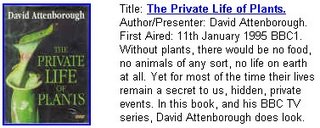
From the page owner:
"For a long time I have enjoyed and been impressed with factual/documentary programmes shown on BBC television. Having watched The Ascent Of Man, America and Royal Heritage in my youth I wanted to create a web page listing those programmes that the BBC does so well."
Listed on that page, in chronological order, are entries for factual/documentaries, giving Title, Author of book/Presenter of programme, where applicable, and the date when the series was first broadcast.
Most of the information on these pages has been taken from BBC sources, such as BBC Online, Radio Times, BBC Information And Archive, BBC Books and personal emails from BBC staff.
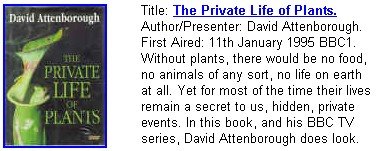
From the page owner:
"For a long time I have enjoyed and been impressed with factual/documentary programmes shown on BBC television. Having watched The Ascent Of Man, America and Royal Heritage in my youth I wanted to create a web page listing those programmes that the BBC does so well."
Listed on that page, in chronological order, are entries for factual/documentaries, giving Title, Author of book/Presenter of programme, where applicable, and the date when the series was first broadcast.
Most of the information on these pages has been taken from BBC sources, such as BBC Online, Radio Times, BBC Information And Archive, BBC Books and personal emails from BBC staff.
Subscribe to:
Posts (Atom)