Showing posts with label Media Talk. Show all posts

9.11.07

A Virtual Woodland - The Future of TV online?

Sophie Stafford posted a link on the Love Earth Blog to a fantastic little website site this morning - http://www.upmforestlife.com/

This website is brilliant - a televisual experience online, exactly where television is heading - interactive storylines with the viewer controlling the stories path. Interesting, informative, pretty, and with lots of clickability and flashy bits!


Sophie Stafford writes:
"You follow a path through a tranquil Finnish forest, complete with bogs, brooks and glades, and each new vista is strewn with little 'species stars'. These bring up information boxes on the animals and plants living in the forest, many of which also play calls. Some species even have videos clips, so you can watch red fox cubs playing, silver-studded blue butterflies sipping from a puddle, as well as majestic elk.If you fancy a spot of virtual birdwatching, you can enjoy dunnocks and willow warblers singing, experience the common crane's noisy display, and catch a glimpse of a black woodpecker or Tengmalm's owl.The forest is managed for both biodiversity and wood products, and you can learn a lot about sustainable tree management as you continue your exploration, including thinning, harvesting and transport to the mill.It’s good to know that all the paper for Radio Times comes from this wonderful woodland."

28.6.07

Big Brother - Why It's not social documentary (it's just a bunch of hyped up celebrity wannabees pratting around!)

When Big Brother started, I, like the rest of the UK was captivated, the Truman show brought alive! We could relate to the housemates and the encounters they faced, warming to some and despising others. But this is manufactured entertainment more than social documentary – these people are the extremes of society, placed in an extreme environment, the episodes are manufactured, the players are manipulated.

We see some housemates as freaks, bullies, scapegoats who we can blame for societies degradation, while some are the loveable characters – the victims; Nadia “the transsexual” or Pete “the tourette’s sufferer”, whose exposure helps to make society more accepting of difference. In many ways the show does reflect the society we live in, different classes or social groups, elements of the characters reside in all of us. However, it is the meaning and controversy that we extract from the show, issues bubbling under the surface of society, rather than the characters themselves, that we use to construct totems for society’s ills.

Unlike Truman, the housemates know that they are being watched, they know that they could leave BB into a life of “celebrity” and win a huge cash prize, they perform and create parodies of themselves which might just strike a chord with the public – is Jade Goody really as dumb as she would have us believe?

- Paul Williams

Why Geo-tagged content is the NEXT BIG THING

A year ago I would have said that podcasting and blogging are the most significant developments on the web, with regards to public engagement and access - but technology evolves so fast that I now consider these to be “old school” and linear, the current fads are in social networking, global positioning and mashups. When geotagging is mixed with blogs, podcasts and facebook, we have a dynamic way of navigating content, our friends and media - spatially through Google Earth, which has revolutionised the way we view our planet.


When on location I have a little gadget which tracks my GPS coordinates as I go about my work. Back at base I can use this geotrack to geotag my media, view it on Google Earth and remotely share it with my friends over the web. Geotagging is the next big thing and it is how broadcasters and producers can extend the life of their content, making it more dynamic, more immersive and placing it in a global context – particular with regards to natural history and travel.

Audio trials have been carried out with GPS tagged narration to guide you through the streets of a city, and interactive games such as Pacmanhattan carried out on the streets of Washington, but this is just the beginning. As KML files become more common, and wifi networks and GPRS becomes more widespread, our TV and Radio audience will be able to access our geo-tagged content from the exact location in which it was captured, creating audio-visual location based experiences.

- Paul Williams

17.1.07

BBC Idents: Old vs New

Is it just me or did the old idents invoke a much warmer feeling in the viewer? people and communities coming together to celebrate the "oneness" of the BBC. The new ones are really clever as short films, and the effects are fabulous, but they are much colder and seem to be more about finding the flashiest way to create a "0" rather than invoking any emotion.

I do appreciate that sometimes familiarity leads to emotion so maybe the new ones will grow on me... Which ever way I look at idents, I would love the job of producing them. I believe they work out to be the most expensive produced television per second - if you dont take into account that they will be repeated thousands of times during their lifetime.
- Paul Williams

Compare below
2002-2006


2006-

The future of the British broadcasting industry?

This is something I wrote many months ago as part of my entry for the Edinburgh TV Festival FastTrack Scheme - I was subsequently offered a place on the scheme.

Of all the hyped new technologies in TV, which is most likely to survive?

Since the days of Napster millions of people have turned away from traditional methods of content delivery to the dynamic and versatile routes offered by the internet. Whether bittorrenting, Video Podcasting or IPTV the quality and range of media continues to grow exponentially - there is already a HD show produced specifically for an internet audience. I do not have a “TV” yet I consume many hours of current TV per week; on my PDA, my Ipod, and my Laptop - anything, anytime, anywhere. With technical convergance and compatability comes an increased ability to create your own schedule and this ability will persist and increase.

The Next 5 Years: The biggest challenge facing the UK broadcasting industry.

As multichannel homes increase and content is downloaded from a wider range of sources there will be a loss of advertising revenue and broadcaster/brand recognition. In this “third age of broadcasting” we must be protective of our brands and IP, rights will need to be carefully managed but at the same time allow the audience to be creative and interact with content as this will add value. Brand recognition is more crucial than ever An on-demand world will expose British broadcasters to increased competition from those who are global, rich and already organised for the digital age, and industries, public institutions, libraries, museums and “bedroom broadcasters” who are entering the digital broadcast territory.

- Paul Williams 2006

The BBC's Planet Earth - What a series to work on...

“Planet Earth” would be my dream series to work on - not only the first true HD Natural History series but a chance to explore and develop new techniques across the whole of the production process.

It was a great attempt at being a 360 degree production; BBC4 switch-over options and associated radio schedule. Accompanying the series is a dynamic flash based “Planet Earth explorer”, taking BBC web navigation to a new level and showing how content can be repackaged, given added value and put to a new use outside of the linear series. I would have tried to make the site live prior to transmission and the clips downloadable for portable players.

A Planet Earth Blog, Vlog or podcast would extend the successful behind the scenes sections, and hold the audience throughout the 6 month intermission period (see Forbidden Technologies Everest web and mobcast).

For the Planet Earth family audience, 9pm was late for a first TX, to accommodate this demographic a CBBC tie-in, or alternative narration – delivered through interactive TV – would have enhanced the younger audiences appreciation. With plenty of tooth and claw the only natural history elements missing were sex and negative environmental changes, which are understandably hard to include when you’re trying to sell a magical and spectacular series.

7.12.06

Web 2.0 presentations now live

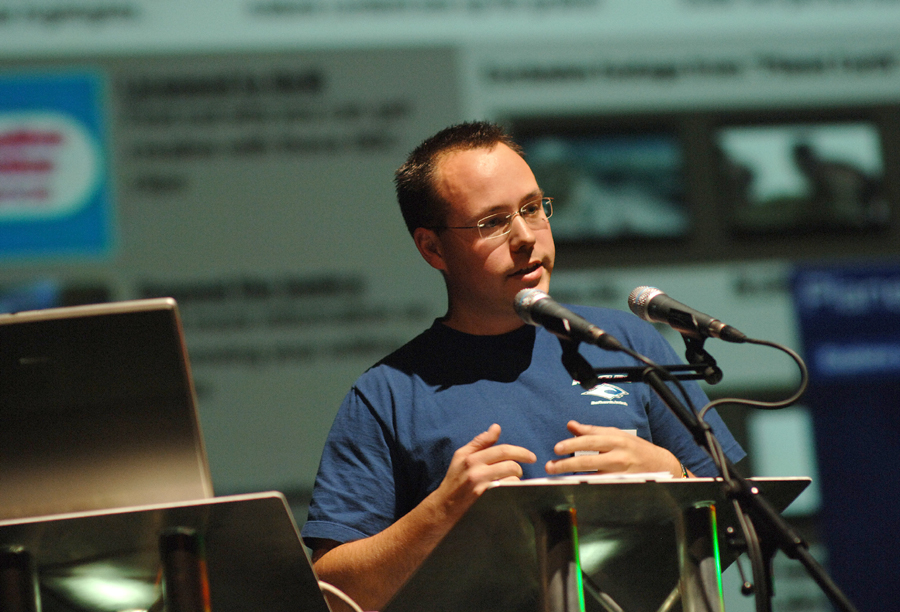
Talks from the recent "Connecting Somerset" Web2.0 seminar are now live on the web, video alongside the ppt slides (produced with Camtasia). Click on the names below to launch the presentation. (Apologies for the speed of my bit - I only had 10 minutes to talk about some of the cool things the BBC are doing in the world of Web2.0!)
- Paul Williams

The speakers were:
Kevin Redpath - Introduction to the conference.

Dan Hilton - Web 2.0 It's all just Semantics. What meaning can add to your website?

Simon Price - Web 2.0 Webs of People, Webs of Data.

Paul Appleby - Web 2.0 A BBC perspective.

Paul Williams - BBC 2.0

Paul Boag - Web 2.0 Pragmatic web design

9.11.06

Web 2.0 - a jolly jape with cheese

This is an excellent overview of the Web 2.0 seminar I contributed to.
By Adam Stone of Rokkmedia.

7 November, 2006
I was lucky enough to blag a free ticket, ahem, attend a conference last night (6/11/06) in Taunton, Somerset concerning the topic of Web 2.0. Not only was my good friend and colleague Bill Wells (of 2.0 Ltd - I kid you not!) organising the video recording of the event (for future vidcast), but ‘podcast-rockstar’ Paul Boag (http://www.boagworld.com/ - reputedly the worlds’ most subscribed-to web design podcast) - someone who has been hugely influential in Rokk Media adopting Web Standards some time ago, was one of the guest speakers (after I introduced him to the event) - so I think my complimentary ticket was well deserved!

The event was well attended, and probably one of the most professional I’ve been to in these here parts - so congrats to all involved.

The theme of the evening was the hot-topic de jour - “Web 2.0” buzz or bizz - hype-full or hope-less!

Speakers included Ben Hilton from Rubberductions, Simon Price from Bristol University (who demonstrated some amazing applications for gathering and interpreting web-based which he insisted was Web 1.5); and two very eloquent Pauls from the BBC - who showed some amazing web-based applications that the Beeb have been working on. Finally Paul Boag who took a swipe at the hype filling a very entertaining 20 minutes or so.

Most speakers, possibly with the exception of Simon, showed how Web 2.0 can be fairly neatly boxed into a huge take-up of broadband fuelling a massive growth in social network/communicate centric sites that use cool technologies like AJAX and Ruby On Rails (among others), and a clean, matter-of-fact design approach aimed at getting straight to the heart of the proposition. Paul Appleby from the BBC was also keen to point out that the web is Darwinian - evolving, gene-like, and could not therefore be realisticaly likened to a software application in the version x.0 mould - fair point Paul!

After the speakers concluded with a Q & A (a much nicer term than FAQ - what went wrong there in Web-lore?), a sumptious buffet of rustic fare was provided - apples, cheese, scones and strawberries - oh yes.

On my way back from the event, battling to keep from crossing lanes on the motor-way in a 3 foot visibility pea-souper, I mulled the wise words of the five speakers and something else occured to me. Thinking back to the eleven or so years that I’ve been involved in web design and development I can see a definite growth-curve emerging - but not so much with regards to the technology or appearance of sites (in fact I can probably show you a duplicate example of anything that exists today that emerged in a previous time). The growth I have seen, is in the understanding and appreciation that clients have for the Web - and how it can enhance and rocket-fuel their individual businesses.

Ten years ago - for example - you couldn’t give away a Web Site! In fact the bulk of our ‘hot prospects’ were “The Internet you say? Oh yes, heard of that - could you come over and show me what it looks like?”. Ten years later and the landscape couldn’t be more different. Clients come to us now knowing exactly what they want out of their web presence, fully aware of the power an online presence can have on their success of their business.

From our point of view this is fantastic. No longer do we have to go through the painful process of convincing our clients that the Web is the way to go!

For me that’s the real evolution of the Web.

Rokk on!

My "Web 2.0 Live" Presentation - A broadcasters perspective

Here are the slides from my recent presentation at Web2.0 Live.
A video podcast of all the talks will be available soon at the Web2.0 Live website: www.web2live.co.uk/

I gave an overview of web2.0 (what ever that means) from the perspective of someone in the broadcasting community, what does it mean to our future, and how do I see the BBC facing it - projects I discussed included, BBC Connector, BBC Collect, Augmented Reality & BBCJam, Creative Archive, Springwatch and the BBC presence in Second Life and other virtual worlds.

Click on the image below to launch the slideshow:


- Paul Williams

26.10.06

Wildscreen 2006 Presentation by Paul Williams

As requested, here are the slides from the presentation I gave at Wildscreen 2006. I have added some information and website links throughout. (For anyone who is interested this is hosted as an image folder on Picasa.com - a service like Flickr)

Click on the image below to launch the presention:

Wildscreen 2006: Breaking out of the box

This summary is not available. Please click here to view the post.

27.7.06

Another case of "who needs Broadcasters anyway?"

Here is a case in point - why should producers rely on broadcasters to distribute their content?

Aardman are doing it with their short films sent straight to mobiles and others created exclusively for the web. Now Talkback Thames is to enter the burgeoning UK on-demand market, launching a broadband service by the end of the summer that will allow consumers to pay to download its content direct from the internet.

The RTL-owned company will initially make available 200 hours of its flagship British comedy series, including Tommy Cooper, Goodnight Sweetheart and Men Behaving Badly.

More recent Talkback Thames series will be added at a later date.

"It is important to start to give consumers the choice in how they want to view their programming. If we don't give them options, someone else will."

More in Broadcast if you are a subscriber